
Friday, April 24, 2026 -- See an Earth Week art project unveiled

By Contributor
By Melanie Mercier
What We Save, Saves Us: An Upcycled Ode to the Inland Temperate Rainforest
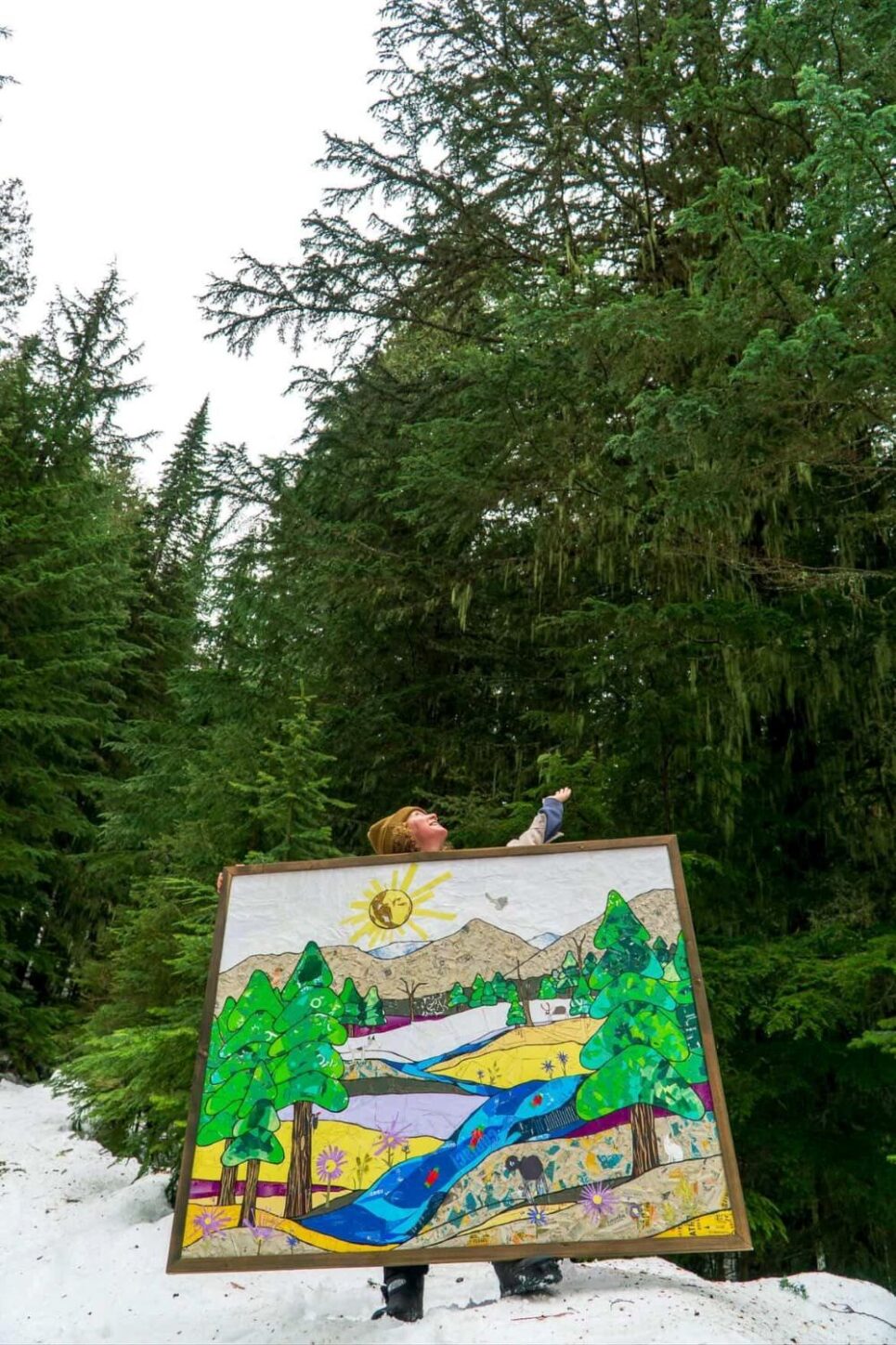
Built from materials diverted from the waste stream and shaped through a collaboration between a local artist and École des Sept‑Sommets students, this Earth Week installation invites Rossland residents and neighbouring communities to honour the species, stories, and fragile brilliance of our rare Inland Temperate Rainforest — known in Sinixt as Sq̓ítlaʔxʷ.
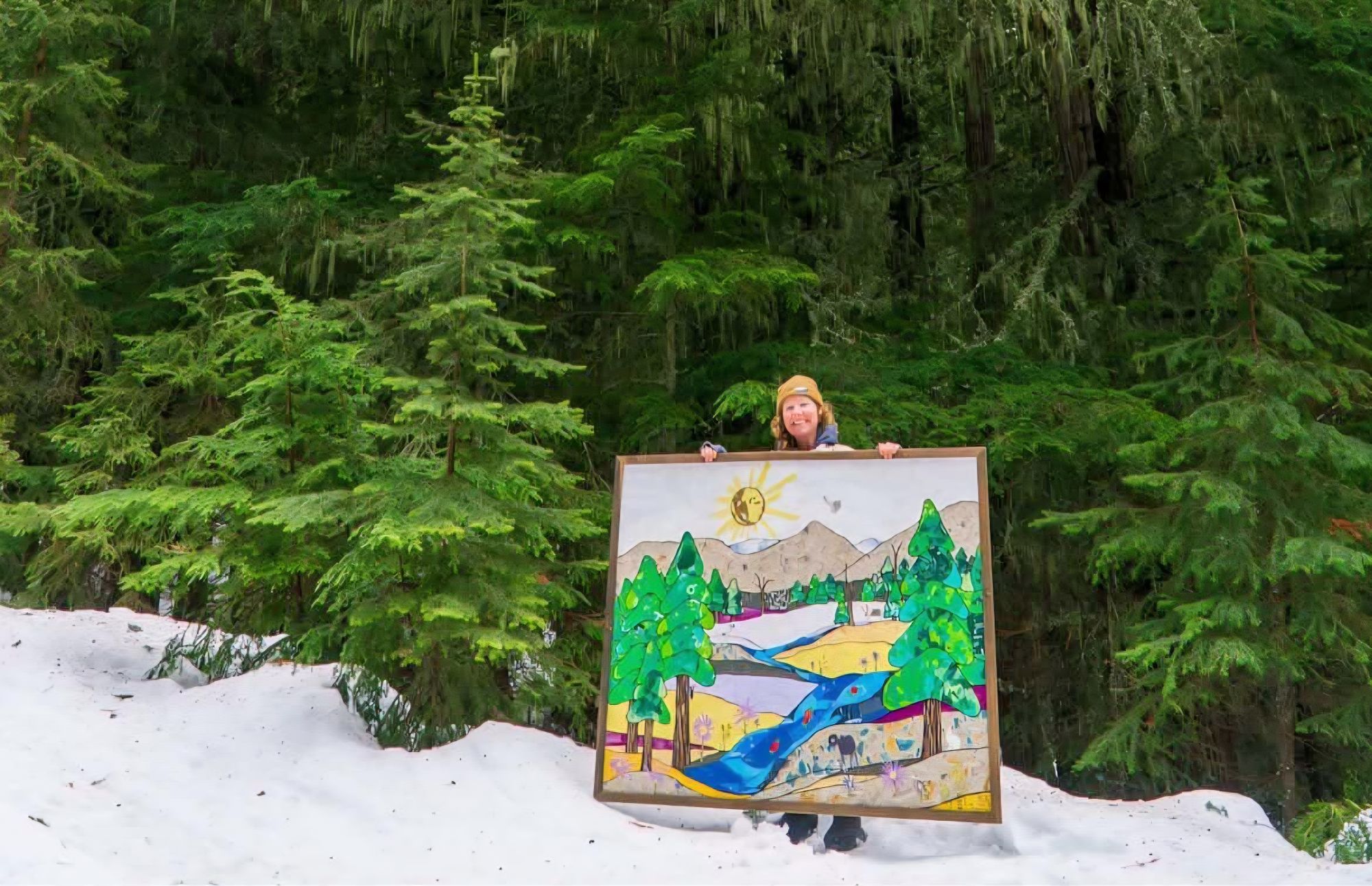
During Earth Week, Rossland residents and the neighbouring communities will have the chance to experience a vibrant community art installation created in collaboration with students from École des Sept‑Sommets—an installation that proves creativity can be a powerful tool for both environmental awareness and waste reduction. The project was made possible through a Moonflower Collective Arts grant.
The artwork will be unveiled this Friday, wrapping up Rossland Earth Week festivities by the Rossland Sustainability Commission at a family‑friendly environmental film night at the Miners’ Union Hall at 5 p.m. The evening will begin with a short introduction, followed by a talk about the artwork, and then two films, to wrap up at 9pm. The event is free to attend, and everyone is warmly invited to join.
Reimagining What Counts as an Art Supply
The artwork was built by the project’s lead artist, with students contributing through hands‑on exploration, design choices, and collaborative assembly. All of the materials used were provided by the artist, who gathered discarded items from home, community spaces, and recycling streams. Instead of relying on new or store‑bought art supplies, the installation was constructed entirely from materials that would otherwise have been thrown away. The artwork was created on a 4 feet by 5 feet upcycled coroplast board.
The project diverted a wide range of objects from the landfill/recycling depot, including:
-
Brown paper packaging
-
Egg cartons
-
Ferraro Foods receipts
-
Carton boxes of all kinds (Bubly, Perrier, beer, cereal, pop and more)
-
Upcycled coroplast sign for the base
-
Upcycled wood for the frame
By working with these items, the project challenges the idea that art requires pristine, store‑bought supplies. It highlights how wasteful conventional art materials can be—and how upcycling can spark creativity while reducing our environmental footprint.
Learning Through Art: The Inland Temperate Rainforest (Sq̓ítlaʔxʷ)
At the heart of the installation is the Inland Temperate Rainforest — Sq̓ítlaʔxʷ in Sinixt — a globally unique ecosystem found only in southeastern British Columbia. This rare forest is defined by ancient western red cedar and hemlock, deep snowpacks, rich understory plant communities, and an intricate web of species that depend on its old‑growth structure. It provides essential ecosystem benefits—from carbon storage to clean water—making it a crucial ally in our efforts to address climate change.
The project invites viewers to consider the rainforest not only as a place of beauty, but as an irreplaceable system whose health supports communities, cultures, and countless species.
Keystone Species: The Forest’s Essential Threads
A central theme of the artwork is the idea of keystone species (or ecologically significant)—organisms that have a disproportionately large impact on the structure and function of their ecosystem. When a keystone species declines, the entire system can begin to unravel.
The installation highlights several keystone species of the Inland Temperate Rainforest, each represented through upcycled materials:
- Caribou – Indicators of intact old‑growth habitat; their decline signals ecosystem stress.
- Grizzly Bear – Wide‑ranging guardians of biodiversity whose presence reflects landscape health.
- Western Red Cedar – A foundational tree species supporting habitat, moisture retention, and cultural traditions.
- Woodpecker – Creators of nesting cavities used by many other birds and mammals.
- Wolf – A top predator that helps maintain balance among herbivore populations.
- Bees – Essential pollinators supporting both wild ecosystems and food systems.
- Camas – A traditional Indigenous food plant that enriches soil and supports pollinators.
- Aster – A late‑season nectar source critical for insects preparing for winter.
- Goldenrod – Another powerhouse pollinator plant supporting bees, butterflies, and birds.
- Eagle – A top predator and scavenger that helps regulate fish and small mammal populations.
- Snowshoe Hare – A key prey species supporting predators and indicating forest understory health.
- Wild Salmon – Nutrient carriers that feed forests, wildlife, and communities far beyond their rivers.
By weaving these species into the artwork, the project illustrates how interconnected life in the rainforest truly is—and how each organism plays a role in the resilience of the whole.
Art as a Tool for Environmental Stewardship
This project demonstrates that art can do more than decorate a space. It can reduce waste, spark curiosity, and help us understand the ecosystems that sustain us. It also shows how creative practice can support environmental education, empowering young people to see themselves as caretakers of the land.
Thanks to the support of the Moonflower Collective Arts grant (@the_moonflower_collective), this upcycled installation will be on display during Earth Week this Friday for the entire region to experience. It will be then displayed permanently at École des Sept‑Sommets. It stands as a reminder that creativity, stewardship, and resourcefulness can go hand in hand—and that nurturing the Inland Temperate Rainforest, Sq̓ítlaʔxʷ, is essential to the future we all share.