
Council Matters: Rossland City Council Meetings, April 20, 2026

By Sara Golling
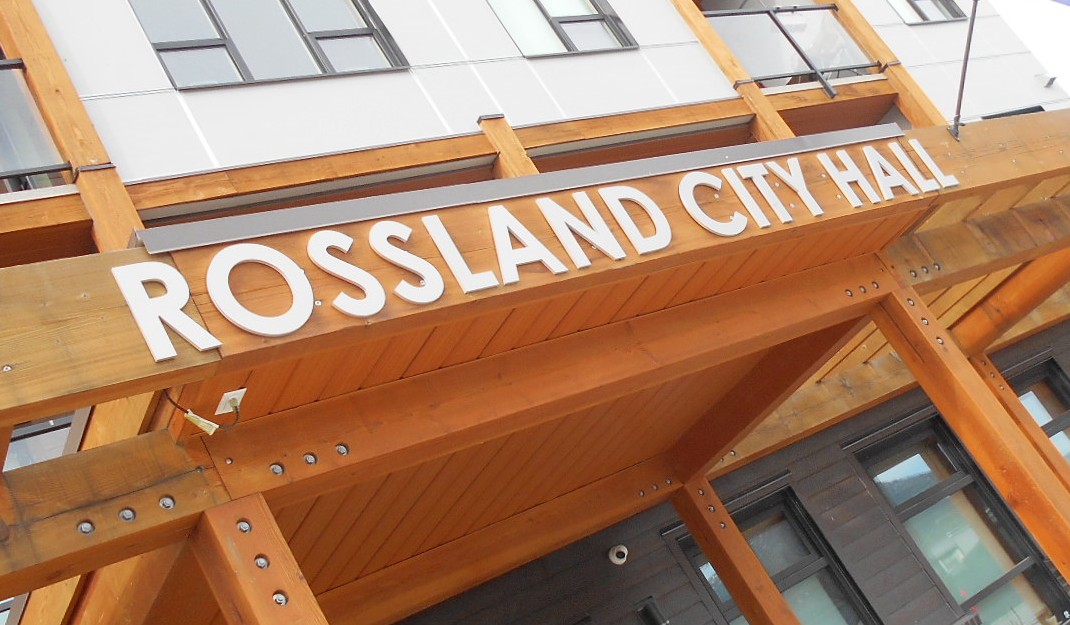
Public Consultation: 4:30 PM
This consultation is dedicated to providing more information for, and hearing input from, residents on the 2026 – 2030 Financial Plan. The earlier opportunities to hear about the anticipated costs of keeping Rossland operating with current or slightly lower levels of service began last year, at the August 11 Council meeting ; the October 6 Council meeting; at the October 27 event at the Miners Hall; and this year, on February 17, a Committee-of-the Whole (CoW) meeting discussed the financial plan, mainly the operational portion; on March 9, another CoW discussed mainly the capital portion of the plan, and on April 7, Council discussed and gave first reading to the Draft 2026-2030 Five Year Financial Plan Bylaw # 2861.
Once the Plan has had second and third readings at the regular Council meeting immediately following this consultation, the final step is adoption of the Financial Plan bylaw, in May.
Who was present:
Council: Mayor Andy Morel, and Councillors Jeff Weaver, Maya Provençal (remote), Craig Humpherys, Eliza Boyce, and Lisa Kwiatkowski. Absent from this consultation: Stewart Spooner, but he was able to attend the regular Council meeting at 6:00.
Staff: CAO Bryan Teasdale, CFO Craig McDonald, Deputy CO Cynthia Añonuevo, Executive Assistant Rachel Newton, City Planner Stacey Lightbourne , and Manager of Operations & Infrastructure Scott Lamont.
The Public:
Four members of the public attended.
Public Input Period:
Chris Troutman said he had been troubled by an inconsistency he had noted – between statements to the effect that the City cannot continue to maintain current levels of service at current levels of taxation, and the actual financial plan. He also urged the City to either not fill the Manager of Recreation & Events position at all, or to fill it from within.
Discussion:
Chief Financial Officer Craig McDonald summarized highlights and impacts of the 2026 budget and the draft 2026-2030 Financial Plan.
He outlined the expected expenditures and the expected sources of revenue, all of which have been reviewed in more detail during previous meetings. Kwiatkowski pointed out that the figures shown on the 2026 Operating budget page include grants and other sources of funds, not just taxes.
One of the key points for residents to understand is that when the City aims for a “10% tax revenue increase” it does NOT mean that everyone’s municipal property tax bill will go up by 10%. This budget for 2026 means that the “average” homeowner’s municipal property tax bill will rise by 8.2% — based on current estimates. The additional funding will come from new development contributing to tax revenues.
On the “Paying for it” page, Teasdale pointed out that some planned projects will not be done if grant funding cannot be obtained, which is not an inconsistency.
Replacing the sewer line between Rossland and Warfield is an urgent need, and the City is looking at all options for funding it.
Staff and Council members responded to a question about DCCs by pointing our that money raised by DCCs can be used only for new infrastructure required by the development in question – and for no other purpose.
Weaver addressed the comment about not being able to fund everything at current levels, and noted that people don’t want reductions in service or in funding to amenities; as one example, he pointed out the large expense of maintaining the arena, and the intense public pressure to keep the arena open. He thinks Rossland needs “a larger service level conversation” and management of expectations.
Boyce commented that she does think the tax increases that have happened, and are planned, are necessary — but she questions the possibility of continuing that level of tax increases for the next 30 years. Teasdale agreed, and Boyce commented further that she thinks Rossland is “ahead of the curve” in its financial planning.
Trautman said he had “zero complaint” on the infrastructure spending, but he really wants “discretionary spending” cut back – such as cutting back on funding KCTS and other recreation spending. Morel noted that historically the city has devoted 5% of its tax revenue on community contributions, and he pointed out that the organizations funded are critical economically — not only to community spirit but to business. He spoke about a suggestion about discontinuing funding for maintaining the City’s landscaping and beautification, and the adverse knock-on effects of that.
Kwiatkowski commented that the volunteer organizations that receive funding benefit the community economically and their services could never be replicated for the sums provided to support their volunteer efforts.
Morel observed , “We aren’t seeing a big push-back” on City spending – they do hear “we’re paying too much in taxes – so cut something that I don’t use.” Trautman referred to the Taxpayers Association and noted that no changes resulted from their input. Another member of the public in attendance supported Morel’s comments about the value of funding community organizations. Boyce said she felt that the additional information the City provided helped dissatisfied people to understand why the tax increases were needed. She also supported the value of funding community organizations.
Humpherys expressed his opinion that the proposed budget addresses the infrastructure deficit and the other needs of the community in a responsible way.
Provençal suggested that future councils can discuss more sharing of recreational assets with other communities to lower costs.
Regular Council Meeting, 6:00 PM:
PUBLIC INPUT PERIOD:
Laura Pettitt asked about the old street sweeper’s trade-in value.
Joanne Drystek spoke about the history of the Rossland branch of the Canadian Legion and its 100th anniversary. The Legion is requesting installation of a commemorative crosswalk at Washington and First Avenue.
DELEGATIONS:
- Heritage Commission
Bonnie Chappell and Joanne Drystek spoke about the Heritage Commission’s purpose and activities, and presented the group’s Annual Report, which contains a long list of the group’s activities and accomplishments. Highlights: the four-year plan — with four main goals, focusing on Education and Communication; Advocacy and Building Relationships; Publications; and the Heritage Registry and Preserving Heritage Sites.
They explained their project to install markers for the graves of the Chinese who were buried in Columbia Cemetery and then disinterred, and the challenge of finding someone to help with the appropriate language – Cantonese.
Humpherys asked whether any one had noticed people with metal detectors going through the cemeteries or other areas, as he had seen that in other parts of the Kootenays.
Spooner noticed that the annual report did not contain a budget. Drystek explained that the Heritage Commission gets most of its funding from Heritage BC, and some from other grants.
They announced that on June 13th, they will hold their Cemetery clean-up, and invited everyone to help.
- Tourism Rossland
Andras Lukacs, ED of Tourism Rossland (TR), requested a letter of support from Council for TR’s application for a renewal of funding from the Municipal and Regional District Tax (MRDT), paid by visitors as part of their cost of accommodations, which funding must be applied for every five years.. Lukacs presented summaries of TR’s work, funding and expenditures, noting that the MRDT funding contributed about 60% of TR revenues.
REQUESTS FOR COUNCIL DECISION:
Rescinding Appointment of Deputy Elections Officer and Appointment of Replacement:
Kristi Calder had been appointed as Deputy elections Officer for the upcoming civic election, but has since moved on to a position with the Regional District of Central Kootenay. A motion to rescind Calder’s appointment, and a further motion to appoint Executive Assistant Rachel Newton to the position, both CARRIED unanimously.
Draft 2026-2030 Five Year Financial Plan Bylaw # 2861:
Motions to give second and third readings to the financial plan bylaw CARRIED unanimously.
Draft 2026 Municipal Tax Rate Bylaw # 2869:
A motion to give first reading to the draft tax rate bylaw also CARRIED unanimously.
Draft Sewer Parcel Tax Bylaw # 2857:
A motion to give this bylaw second and third readings CARRIED unanimously.
Draft Water Parcel Tax Bylaw # 2858:
The draft Water Parcel Tax bylaw also passed second and third readings by a unanimous vote.
Recreation Fees and Charges Bylaw # 2868:
A motion to give first reading to the Recreation Fees and Charges Bylaw CARRIED unanimously.
Spooner noted that a slight increase in ice time rates doesn’t come close to covering the costs involved; “We aren’t getting cost recovery on this facility.”
Morel noted that Trail will now be having ice 12 months of the year on one of its two ice sheets – and also has a large industrial tax base, and a generous “angel investor” as well.
Rossland Child Care Society 2026-2029 Lease Agreement renewal:
Council discussed a motion to renew the lease agreement for the Rossland Child Care Society (Golden Bear Children’s Centre) for a three-year term, 2026 to 2029, as presented, and a motion to approve the agreement FAILED unanimously.
Boyce supported the motion, expressing that child care has a high economic value to the community. Provençal pointed out that Golden Bear is the only facility that provided childcare for very young children, but she noted that she doesn’t have the full financial information on any subsidies, and that the City appears to be charging Golden Bear more than the building costs to operate, and wonders if that is to provide a reserve for future replacement.
Kwiatkowski echoed her concerns, and said she’s reluctant to support the agreement without the additional info. She also pointed out that the agreement proposed for the Seniors appears to support the Seniors more than the child care group, and our OCP emphasizes the value of childcare.
Weaver noted that the agreement as presented seems to put Golden Bear in a position of uncertainty.
A representative of Golden Bear in the audience spoke up and referred to the needs assessment done earlier, identifying childcare as a critical need.
A motion to defer the decision until information is provided about the full costs of owning the building, and until City Staff have discussed the matter with the Society, CARRIED unanimously.
Draft Lease between the City and the Rossland and District Senior Citizens Association:
The new lease terms require the Association to pay what the City regards as market value for a three-year lease (2026 to 2029) of the City-owned building, and also requires the City to give the Association “ financial support … through its Community Support or equivalent municipal funding program in an amount sufficient to cover one hundred percent (100%) of the rent payable by the Lessee under this Agreement, subject to annual Council approval and in accordance with the City’s applicable policies and financial plan.” This arrangement is presented as a more transparent way of providing financial assistance to the Association, compared with the previous method of charging rent of one dollar per year, and granting a Permissive Tax Exemption.
A motion to approve the new agreement CARRIED, as did a second motion to provide a grant to compensate the Society for the costs of the agreement.
Provençal asked for clarification about Permissive Tax Exemptions and how they will fit into the City’s subsidizing of groups. Teasdale replied that the City is moving to put all its support for organizations – rent support, tax exemptions, and other financial assistance — into the “grant in aid” bucket so that the total City support provided to each organization is clearer. This may also have the effect of trimming the total expense to taxpayers of subsidizing organizations.
RFP Review and Award for new Street Sweeper:
A motion to approve the award of the contract to Kendrick Equipment to trade-in the 2013 Esling Sweeper for $25,000 AND supply and deliver a 2026 Schwarze A7 for $523,434, for a total balance after trade-in of $498,434 (exclusive of applicable taxes), FAILED after discussion.
Staff noted that they recommended this purchase over the other two lower bids received because they assessed it as the best overall value for the City.
Boyce questioned the expenditure, and the low trade-in value of the old sweeper, and Lamont explained the increasing amount of expense for maintenance and repairs and time lost on the old (current) sweeper, as well as the need to get the sand and gravel off the roads and keep them out of the storm drains. He explained that the dealer sets the trade-in value as part of the offer, and that rejecting the trade-in value means rejecting the entire offer.
A motion to reconsider the purchase of a new sweeper after this season CARRIED.
Monthly Report on Municipal Expenditures:
A motion to approve the City’s expenditures for the past month CARRIED.
FOR INFORMATION ONLY:
First-Quarter Report on 2026 Corporate Management Plan:
This 14-page report lists 38 different projects under the City’s five departments – Administration, Finance, Planning & Development, Operations, and Recreation – identifies the priority level for each and reports on the progress made for each one. Residents who wonder how City staff spend their work hours may find it interesting.
First-Quarter Budget Update for 2026:
This is a one-page summary of the revenues received, and the amounts spent, by the City at this stage of the year. In short, both revenues and expenditures are “in line with expectations for Q1.”
The usual monthly reports:
Building Permit Report
Building Permit Inspections by Type
Step Code Energy Rebates
Public Works & Water Production Report
Eye On Water Report: As the City points out, “EyeOnWater allows users to connect to supported water utility accounts and track their latest water usage, detect leaks, and discover trends for of usage.” People can easily sign up for it.
(There was no report this month on Bylaw Enforcement & Animal Control.)
MEMBER REPORTS (selected highlights only):
Weaver, Kwiatkowski, Spooner, Boyce, Morel and Provençal attended the AKBLG conference, and all found it a valuable experience. Weaver noted that, rather than being “junket” it cost him in various ways to attend.
Provençal noted that Rossland’s two resolutions passed.
Boyce noted that trust in government has “fallen off a cliff” after recent global political events.
Morel commented on a presentation emphasizing the importance of housing as an economic driver.
Lightbourne clarified, in response to a query from Boyce, that Rossland’s bylaws are “wide open” to modular housing.
A motion that the City will provide a letter of support for Tourism Rossland as requested during their delegation CARRIED, with Weaver recused.
THE MEETING ADJOURNED, and on her way home your reporter contemplated the importance of its fresh water supply in considering increasing a community’s housing units – as in, how many homes can Rossland’s precarious water supply support as climate change progresses, along with its attendant droughts, heat domes, extreme rainfall events, lower snowpacks and more intense wildfires, without completely depleting the natural ecosystems that also rely on the streams we drain of water during the dry season.