
Toxic council procedure kills proposed pesticide bylaw

By Erin Handy
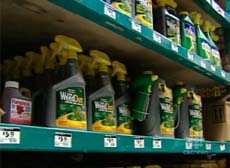
Rossland’s proposed pesticide ban died another procedural death this week, in the rather (ahem) toxic environment of the city’s first council meeting of the year, with the mayor roaring about “criminals” and councillor Jill Spearn so disgusted by proceedings that she briefly lost the ability to speak.
Monday’s introduction of Pesticide Use Bylaw #2495 marked something of a milestone in a long campaign by Prevent Cancer Now, a lobby group, to restrict the use of cosmetic pesticides within Rossland city limits as a public health protection measure. The group is no stranger to setbacks–the proposal to regulate pesticide use by bylaw was rejected in a tied vote in early 2010, but re-emerged in November with strong enough public support for council to agree to draft and discuss a pesticide banning bylaw modelled on one imposed by the District of Invermere in 2009.
One wonders if the issue proved so poisonous there.
Generally, the first reading of a bill is intended only to introduce a proposed law, and elicit some decision about whether to proceed with further discussion on it. But this bill had some troublesome bits. It was quickly amended– and subsequently rejected.
The bylaw proposed to disallow residential pesticide use on public and private land within city limits, with exceptions for “agricultural and forestry land, transportation, public utilities, golf courses, recreational resort properties and any other property for which the approval has been granted by the federal or provincial government or an authority having jurisdiction over such matters.”
Jurisdiction is the key, according to Mayor Greg Granstrom, who insisted that the banning of legal substances is well beyond the scope of municipal responsibility and expertise.
“This issue is governed by Health Canada, the U.S. Environmental Protection Agency and the World Health Organization; all recognize that pesticide use–when used as instructed–is safe, period,” he said. “[These organizations] are there to protect the citizens of Canada, there to protect the citizens of the United States, there to protect the world… we here in Rossland are here going to usurp their expertise… we do not have the right to say to the citizens of our community, ‘you cannot use a legal product’. All we’re doing is making people criminals.”
The bylaw also contained some uncomfortable language encouraging people to report illicit pesticide use to city hall, the only likely enforcement option given the absence of an active bylaw officer in the city.
“I’m very torn about this,” said councillor Kathy Wallace, carefully. “I certainly would never accept anyone saying I’m pro-pesticide use, but I think we have to be very careful about the tools that we use… The notion that we should encourage our citizens to come to city hall and report on their neighbour…I have a real struggle with this.”
Even the proposed citizen-tattling enforcement strategy would require an impractical burden of proof, according to city administrator Victor Kumar. Several councillors spoke in favour of enacting the bylaw anyway as a symbolic political or educational gesture given the vocal community support, comparing it to the city’s anti-idling or dog control bylaws, also not reliably enforced. Councillor Laurie Charlton took things one sizeable step further.
“At best, this is a symbolic bylaw. I think it is meaningless because it is unenforceable,” said Charlton, who then drastically expanded the reach of the proposed law with an amendment to move beyond “squirting a few dandelions,” extending the ban geographically beyond city limits to include the entire watershed.
This after first proposing an amendment removing the exceptions for agriculture, golf courses, resorts and the like, which he dropped upon the mayor’s plea to just get past first reading.
But Charlton’s watershed amendment passed quickly, securing votes from councillors Kathy Moore, Hanne Smith and Andy Stradling, leaving other heads shaking around the table. Next, with the spectre of the complex and divisive watershed issues of 2008 now looming large, the pesticide restriction bylaw itself–now drastically revised–was sunk.
Mayor Granstrom, councillors Wallace, Charlton (despite proposing the amendment) and Spearn now voted against continuing past first reading. The issue cannot be revisited for six months.
“Because it got changed,” said Spearn, dejected. She had initially supported further consideration of a pesticide restriction bylaw. “That was procedurally awful.”