
Record Ridge discharge permit should not be issued until health and environmental issues are resolved, SRRAC says

By Contributor
The Save Record Ridge Action Committee (SRRAC) is urging the BC government not to issue an Environmental Management Act Permit for the proposed Record Ridge mine until serious issues related to human health, air quality, water contamination, and environmental monitoring have been resolved. Among other things, the permit would allow discharges to the area’s air and water.
For the last three years SRRAC has retained independent experts to examine the project across health, environment, atmospheric science, hydrogeology, geochemistry, mine water management, engineering, air pollution, and other aspects.
“We have gone far beyond simply expressing our concerns,” said Nils French, a director with SRRAC. “We have retained several qualified independent scientists, medical experts, and engineers to examine the technical record and this evidence has been submitted to the Province. What we still have not received is a single substantive response explaining how any of the issues identified have been resolved.”
That expert work has yielded hundreds of pages of analysis, containing numerous findings across several topic areas.
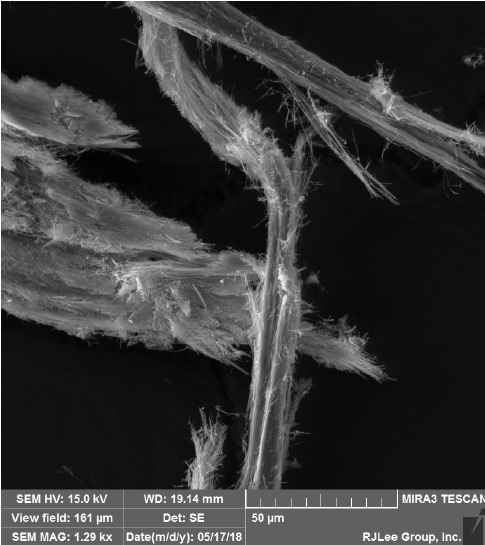
Asbestos exposure is one of the risks and is central to much of the evidence SRRAC has submitted. The company’s own testing identified chrysotile and tremolite asbestos at Record Ridge, including veins up to six millimetres thick that in some cases contained as much as 80% asbestos. An independent geologist retained by SRRAC found that the company’s frequently cited asbestos content estimate could not be independently reproduced from the data and may obscure higher concentrations. That matters to people living in the area because drilling, blasting, crushing and hauling can release asbestos fibres into the air, where they can travel great distances. If inhaled, the fibres are known to cause mesothelioma, asbestosis, and lung cancer, often decades later.
An independent review from an atmospheric meteorologist stated that there are “strong, if not compelling reasons” to conduct at least a screening-level air dispersion assessment, while also identifying the potential for mountain winds to transport pollution downslope toward lower-lying areas like Rossland, Warfield, and Trail. SRRAC notes that such an air dispersion assessment, which is required for most proposed mines in BC, has not been done for the project. The same reviewer also challenged the project’s use of Warfield weather data, which is one town over and several kilometres away, in place of actual data from Record Ridge.
Independent medical reviewers, including one local doctor and a physician who specializes in air pollution, have identified potential health risks from mine-generated particulate pollution and asbestos exposure, which could impact nearby residents, with children and people with asthma facing heightened risks.
Water and geochemistry experts have identified gaps in groundwater baseline information, groundwater flow characterization, and metal leaching assessment. One professional geoscientist concluded that adequate metal leaching and acid rock drainage sampling had not occurred because the study did not include samples from inside the actual pit area that is proposed for the project. In practical terms, that leaves significant uncertainty about what the rock actually being mined could release into water.
Even with those gaps, the project’s own water quality model still predicts aluminum, mercury, chromium, iron, and beryllium above the limits set out by the Province. These elements can be toxic to people and aquatic life at elevated concentrations. The latest independent review concluded that the draft permit is not sufficiently protective of the environment and found that the company has not shown that its treatment system can reliably meet the required limits
All of this matters because the project proposes to discharge this water into the headwaters of Sophia Creek, part of the Columbia River system, and surface water downstream of the mine is used as a drinking water source. In addition, the regional aquifer beneath the mine also underlies nearby communities and is used for drinking water as well.
Interior Health previously advised provincial reviewers that it was not recommending that the project proceed because outstanding issues remained, including asbestos, dust, water quality, transportation, metal leaching and acid rock drainage, and potential hexavalent chromium, which is a known carcinogen. 112 Kootenay Boundary physicians have also raised public health concerns in a letter that was sent to various ministries.
The concerns extend across the international border. The Washington State Department of Ecology has raised concerns about air emissions and fugitive dust, water pollution, asbestos and chromium exposure, and potential effects on communities across the border in Washington.
“Washington State is raising these issues because it has a responsibility to protect its citizens and environment,” said Melanie Mercier, also a SRRAC director. “People living much closer to this proposed mine right here in British Columbia deserve the same degree of care from their government.”
“No final decision has been made, and that matters,” says Mercier, “the Province has a substantial independent technical record before it. They still have an opportunity to engage with that evidence, assess the issues, and make the right decision. As it stands now, and based on the evidence before the Province, we do not believe the current application record demonstrates that the Province’s requirements have been met or that the proposed permit would be sufficiently protective of human health and the environment.”
SRRAC is asking residents to immediately contact Environment and Parks Minister Tamara Davidson and Premier David Eby and ask that the permit not be issued until the outstanding concerns have been substantively addressed and local representatives have been heard.
SRRAC is also asking supporters to help fund its continuing legal work and independent technical reviews. Donations can be made at the Record Ridge GoFundMe page or through the group’s website.
Mercier pushed the urgency of this moment: “The decision is imminent. Now is the time for the Province to get this right before irreversible changes are made and the public is left dealing with the consequences.”