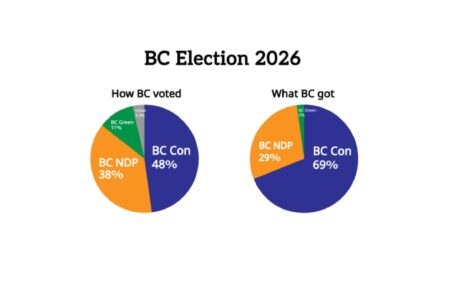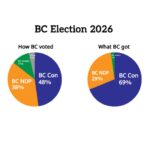


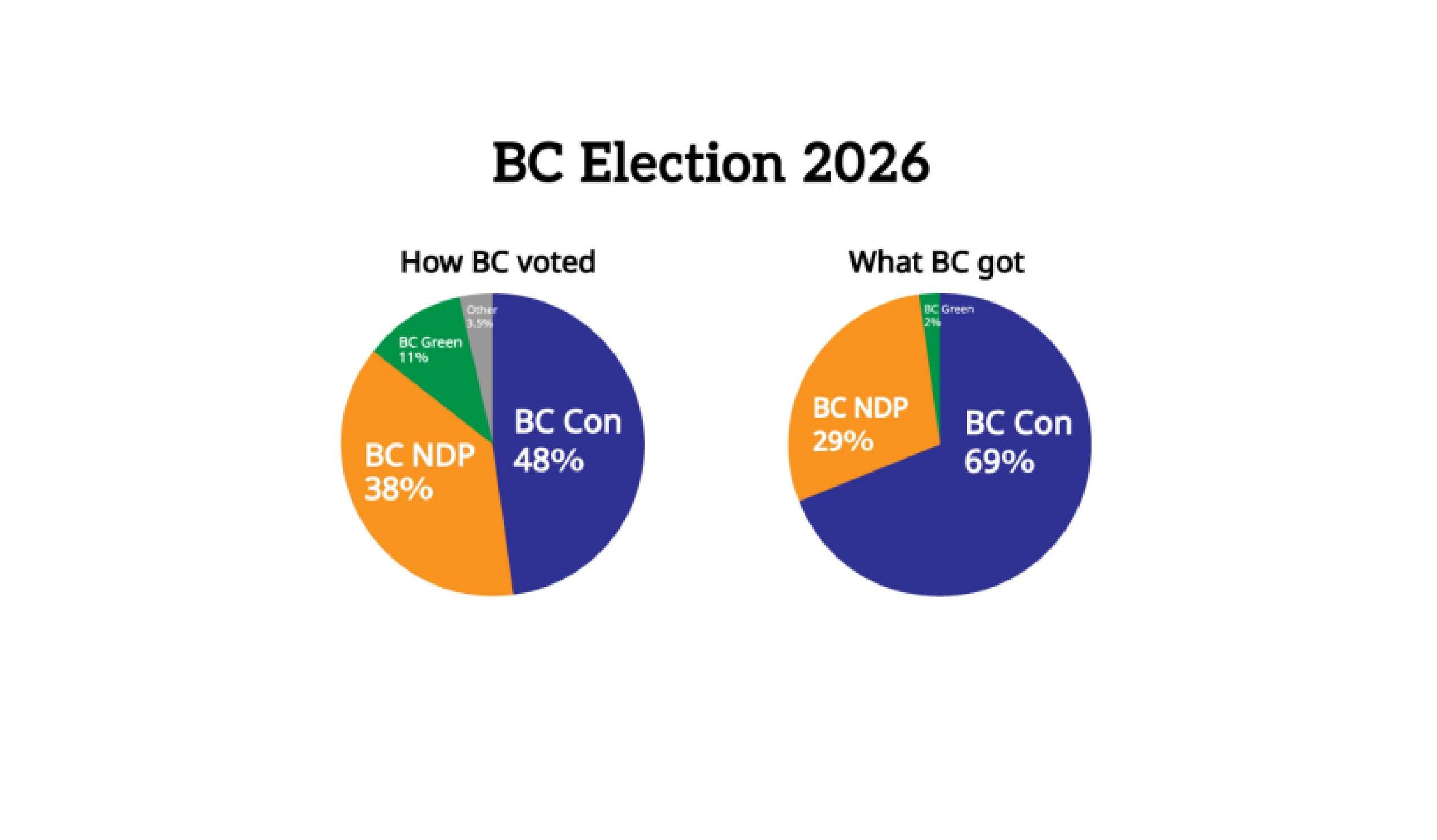
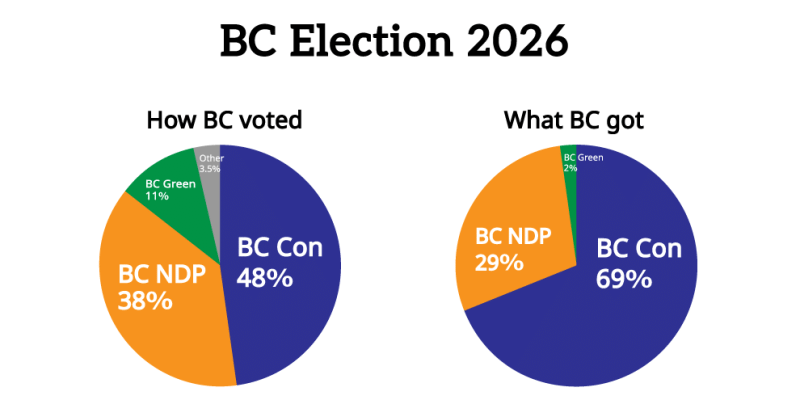
Only 48% of BC voters supported the BC Conservatives, yet the voting system has handed Lorne Doerkson’s Conservatives 69% of the seats and 100% of the power.
The election results did not reflect what voters said with their ballots:
- The BC Conservatives got 69% of the seats with 48% of the vote.
- The BC NDP got 29% of the seats with 38% of the vote.
- The BC Greens got 2% of the seats with 11% of the votes, electing only 2 MLAs to represent their voters.
- CentreBC got no seats with 1.6% of the votes.
First-past-the-post is to blame for giving former Premier David Eby the incentive to waste millions of dollars on an unnecessary, opportunistic snap election.
While the political right was temporarily split into several competitive parties, Eby saw an opportunity to sail to another majority government with a minority of the vote. It’s the same reason Doug Ford gambled on a snap election in 2025 after two years in Ontario.
With proportional representation, the incentive to roll the dice for all the power is eliminated.
If a party with roughly 40% voter support is up a few percentage points in the polls, or their opponents are down a few percentage points, there’s no incentive to call an early election, because the outcome will still be that parties have to work together.
With first-past-the-post, BC voters are in for a severe case of policy lurch.
Policy lurch is what happens in a winner-take-all system when one majority government is replaced by a new one and major policies and programs are completely reversed or dismantled.
For example:
The BC Conservatives have pledged to halt construction of the Massey tunnel and build a bridge instead, despite hundreds of workers already on site and a 3 billion dollar commitment from the federal government for the tunnel.
First-past-the-post policy lurch on the tunnel/bridge dates back to 2017, when the new BC NDP government reversed the BC Liberal plan for a bridge.
The BC Conservatives have also promised to repeal DRIPA. While DRIPA’s supporters acknowledge that its implementation has been flawed, a 180 degree turn with a total repeal of DRIPA could cause serious and lasting damage to the government’s relationship with First Nations, and adverse court decisions. This in turn could have detrimental implications for projects going forward.
With a system of proportional representation, no single party would have had all the power and parties would have had to compromise, creating longer-lasting solutions.
In many countries with proportional representation, cooperation across the aisle is the norm and better long-term outcomes on the economy, health and the environment are the result.
BC voters were deprived of meaningful choices due to first-past-the-post
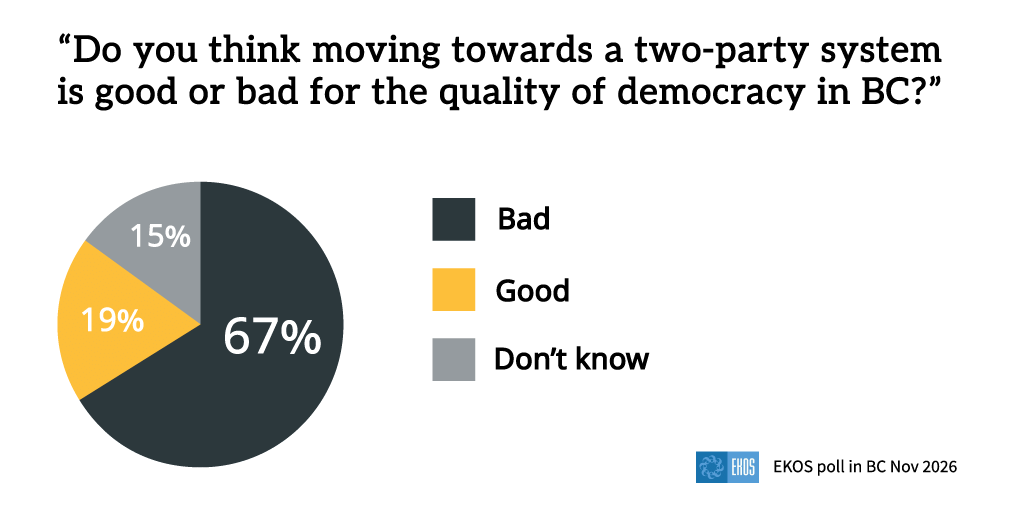
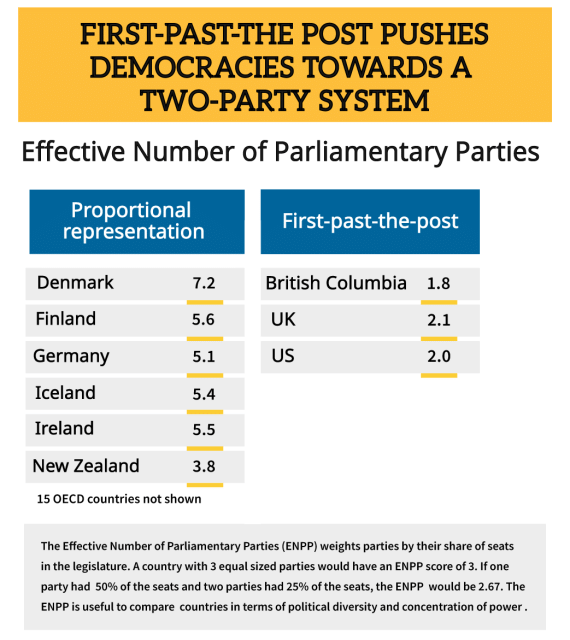
British Columbians are clear: They don’t want a polarized, two-party system. Unfortunately, first-past-the-post is pushing BC in that direction.