
Column: On love and legacy - Shifting baseline syndrome strikes home

By David Suzuki
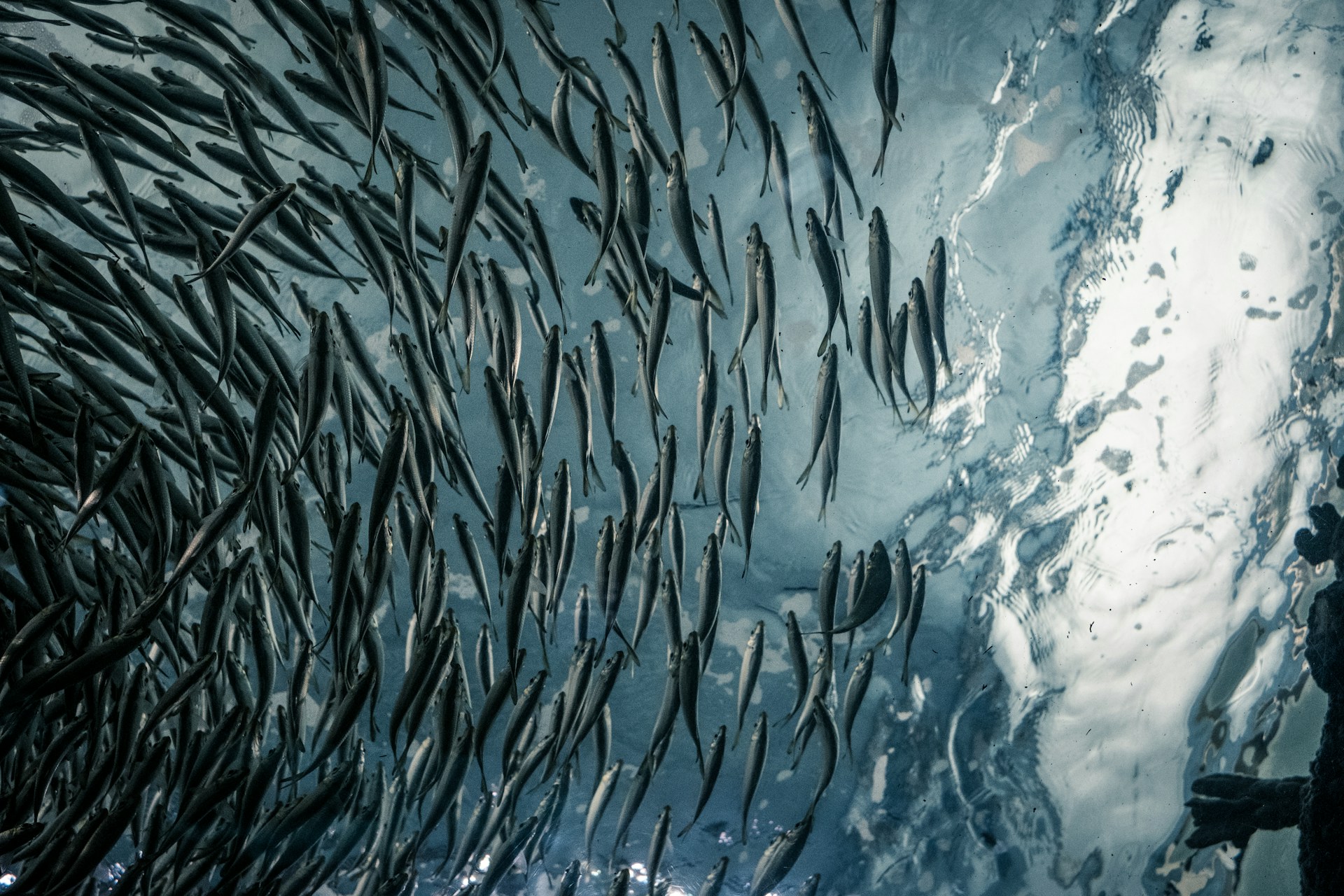
When my wife Tara and I arrived on Quadra Island in the late 1980s, we were awestruck. Forests stretched to the horizon, fishing boats chased salmon, scores of herring rushed about as eagles circled above. Coming from Vancouver, the cove where we bought our cabin seemed like a secret oasis.
Our neighbours told a different story. Having lived there for 50 years, they recounted a version of Quadra Island that no longer existed: coasts teeming with red snapper, abalone, herring and cod as long as an arm. The schools of fish we saw on our arrival paled in comparison to decades past. It was hard to reconcile the natural vibrancy we saw with the losses we didn’t.
In 2020, I spent early lockdown mornings on Quadra walking outside with my grandkids. At my old age, I remarked, “Look at that! They just cut that tree down. Look at the garbage on the shore here!”
My grandkids saw something different. When I found a salamander in a rotting log, you would’ve thought I had won a Nobel Prize. To them, the natural world is magical. It was hard to reconcile the awe in their eyes with the losses I catalogued through mine.
That’s the dizzying cognitive dissonance of “shifting baseline syndrome.”
A socio-psychological phenomenon, shifting baseline syndrome describes how environmental information is lost from memory over time, so changes go unnoticed. Marine biologist Daniel Pauly coined the term in 1995. He observed that fisheries scientists were measuring fish population sizes with reference to those present at the beginning of their careers. Fish stocks declined, and when the next generation of scientists started their monitoring, that declined state became the baseline. “We transform the world, but we don’t remember it,” Pauly remarked at a TED Talk two decades later.
The generational amnesia observed by Pauly, my Quadra neighbours and me is a main cause of shifting baseline syndrome. Younger generations inherit degraded environments with no memory of what existed. The baseline shifts, and the cycle repeats.
In this way, shifting baseline syndrome deceives us into thinking the history of a place or species only extends as far back as our memory of it.
Nature doesn’t adhere to human memory spans, but our sense of urgency does. As baselines shift, we get more tolerant of degraded environments. We feel less pressure to push politicians to implement policies aimed at conservation and restoration. We may not feel action is necessary.
After all, if the news reports that fish are large even when they’re only a fraction of their previous generations’ size, did they ever shrink? If my grandkids don’t notice anything ominous about a clean windshield after a summer road trip, did insect populations actually plummet?
If all this has been happening unnoticed, is it really that bad? If it is, is there anything we can do about it?
It’s a slippery slope from skepticism to cynicism to fatalism. Proof is in the subtleties, and shifting baseline syndrome proves that fatalism becomes fatal. In one human lifetime, we’re left with shrunken fish and shrunken ambitions, polluted ecosystems and polluted politics, extinct species and extinction of experiences with nature. What we forget or forego is killing us.
It raises an important tension I wrestle with.
This year, touring the country with Tara for our play What You Won’t Do for Love, releasing my latest book Lessons From a Lifetime and celebrating my 90th trip around the sun have forced me to confront love and what others would call legacy in surprisingly sentimental ways.
When I think of legacy, I think of how many old-growth cedars or pollution-free shorelines I’m handing to my kids and grandkids. Will the world still look magical to them when they’re my age?
Shifting baseline syndrome lays bare all the ways past generations failed future ones. It also reminds us that we can shift baselines in another direction.
The world acted in the 1970s and ’80s, banning chemicals that damage the ozone layer, and we’re now seeing signs of recovery. It takes longer to heal than it does to harm, but healing is possible. The best way I can tell my grandkids “I love you” is to fight for a world that heals, a world that maintains their awe.
David Suzuki is a scientist, broadcaster, author and co-founder of the David Suzuki Foundation. Written with David Suzuki Foundation Communications Specialist Brandon Wei.
Learn more at davidsuzuki.org.