
Editorial: Elbows Up for Climate - 'We need nation-building, not nation-burning projects.'

By Sara Golling
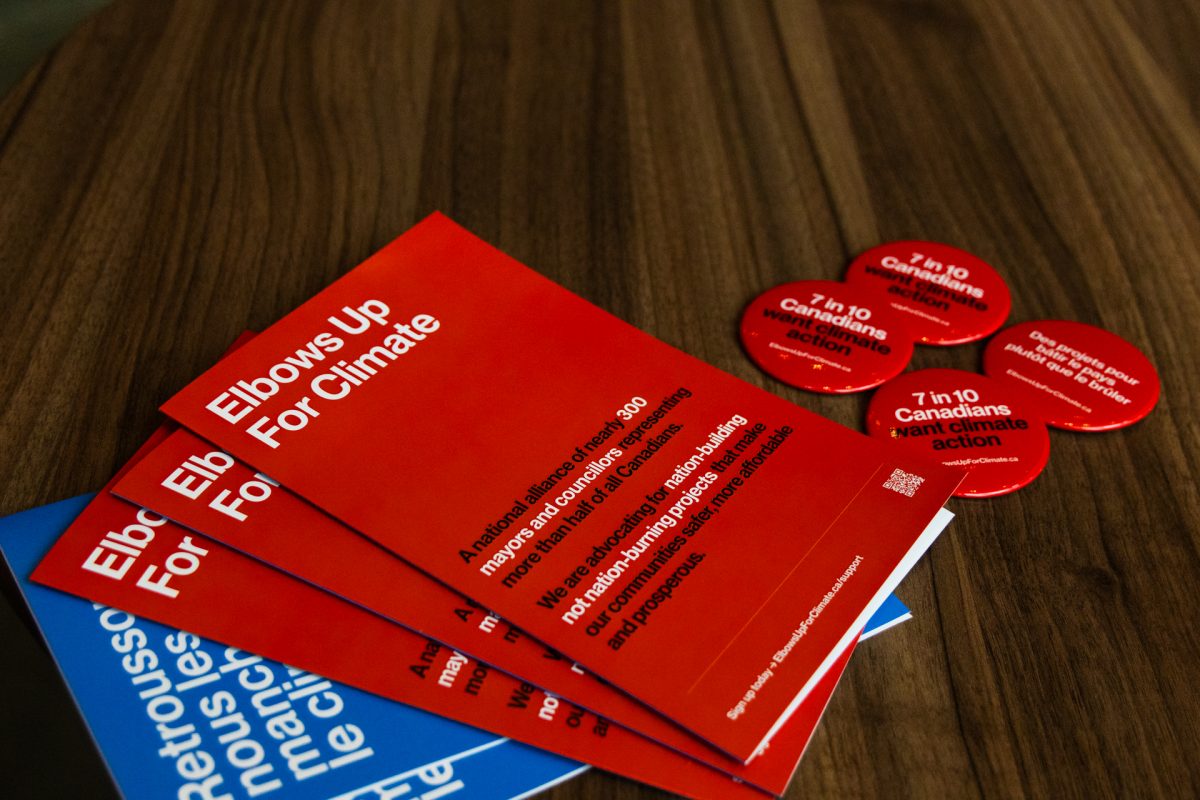
Rossland’s Mayor, Andy Morel, has added his signature to a letter signed by at least 300 other municipal leaders across the nation, urging Canada’s federal government to undertake a suite of actions intended to improve the country and our climate efforts. The letter is part of a campaign by a large group of municipal leaders under the name “Elbows Up for Climate” which Morel referred to as a “collective effort by municipal representatives to bring the climate crisis issue back onto the national agenda.”
On the “Elbows Up for Climate” website, under the “About” tab, the Climate Caucus is listed as “Anchor Partner.”
The Climate Caucus was the brainchild of Nelson City Councillor Rik Logtenberg back in 2019, and former Rossland Mayor Kathy Moore was one of the early members. It is a national non-profit supporting local elected leaders to enact climate policy in their communities and advocate across all levels of government.
“Elbows Up for Climate” met near, but not as part of, the recent Federation of Canadian Municipalities (FCM) Conference in Edmonton. Rossland was not represented at that gathering this year, partly, Mayor Morel acknowledged, as a cost-cutting measure, because the FCM is one of the more expensive conferences to attend. He said that Rossland is focusing more on what can be accomplished with the Union of BC Municipalities (UBCM) at this time, while still supporting initiatives like the “Elbows Up” campaign.
According to an article in Canada’s National Observer, attendees expressed concern that the climate crisis has been “taking a back seat” to worries about affordability, but felt that federal actions that are likely to accelerate the climate crisis are not going to improve life for anyone—except perhaps (and only temporarily) oil companies.
The gathering heard from “Fire Weather” author John Vaillant, who thought that the catastrophic Fort McMurray fire, of May 2016, would have spurred politicians to focus on curbing the conditions that made the fire so devastating. Instead, those who could have taken effective action to curb accelerating climate change seem to have turned a blind eye and continue to encourage fossil fuel exploration, development and consumption. (More pipelines! More LNG!) Vaillant also noted that everyone now has either been put on alert or evacuated, or knows someone who has been.
The group suggests five principal actions: a national, omnidirectional, clean energy grid; constructing at least 2 million net-zero below-market homes; mass retrofits, with heat pumps and solar installations; a national high-speed rail system connected to local electric buses, and a “national resilience, response and recovery strategy.”
Edmonton Mayor Andrew Knack said that he thinks climate concerns and affordability can both be relieved by net-zero transportation and housing.
People who have been directly affected by climate change and the intensified disasters that it fuels are much more eloquent about the need to curb fossil fuel production and use. Richard Ireland, the mayor of Jasper, Alberta, admits that before the Jasper fire burned his town and his home, he might have remained silent in the face of the competing interests of oil production and the climate crisis, but seeing the scorched remains shifted his perspective.
In a June 8 press release from “Elbows Up” Ireland stated, “More Canadian communities are likely to burn to the ground this summer as senior orders of government appear ready to double down on fossil fuel expansion. Even as other national governments are committing to getting their citizens off the carbon-fueled rollercoaster by investing in renewables and resilience, in Canada we continue pouring gasoline on our wildfires. Public subsidies for an industry already making multi-billion dollar profits adds only pathos to tragedy.”
Readers might note that other towns had burned well before Jasper – Fort McMurray and Lytton come to mind – but apparently without affecting the opinions of people who didn’t live in those places and lose everything. (After all, it’s been raining! Why worry about wildfires?)
Does it really take losing one’s own home to the newly frequent and more intense wildfires to inspire an understanding of the need to stop doing what makes wildfires more frequent and more intense? Do we really feel so buffered from the real world that we think it doesn’t matter until we personally have lost everything to the kind of disasters that we so often read about – ones that happen elsewhere?
Not everyone needs to be convinced by personally experiencing tragedy and trauma. The Climate Caucus and the “Elbows Up for Climate” campaign are proof of that.
This is a civic election year. Elected officials have a boots-on-the-ground effect on local policies and regulations that directly affect climate change. Politicians who vote for action to curb climate change are not rewarded financially – they do it because they feel a duty to try to improve conditions for life here on the earth, in their own communities and generally, and they often do it in spite of intense and misleading lobbying from oil and gas interests.
Who will you vote for?