
Rossland council wants public input on leash laws and smoking bans

By Andrew Bennett
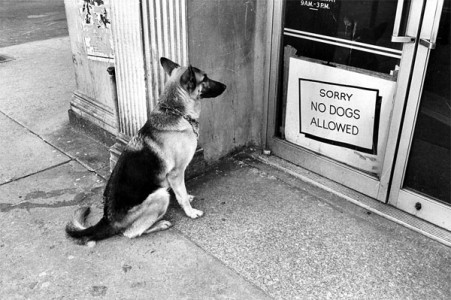
Following council’s request in September for a “smoking dogs” bylaw, city staff returned to council on Monday with a report on bylaws used by other communities to control dogs and restrict smoking in public areas.
Council voted to provide several opportunities for public input before contemplating any change to either the ban on dogs downtown or the introduction of smoking restrictions in certain public parks, such as Harry LeFevre Square opposite Ferraro Foods.
Coun. Kathy Moore started the conversation: “I think this is a great opportunity for us to get public input. As we’ve seen from the Corporate Officer’s report [summarized below], there are a lot of municipalities that allow dogs on leashes.”
“As for smoking in the park,” she continued, “I think that’s a really interesting one to look at. A number of other communities—more than the ones that were in our packet—exceed the provincial rules.” These include 67 municipalities across Canada, she said, and 17 in BC. In addition, she said, Fruitvale has some restrictions on smoking in parks as well.
By the staff report, we count 21 BC municipalities with bylaws that exceed provincial or district smoking restrictions—Abbotsford, Anmore, Belcarra, Coquitlam, Delta, Kelowna, Langley, Nakusp, Nanaimo, North Vancouver, Pemberton, Pitt Meadows, Port Coquitlam, Port Moody, Powell River, Richmond, Salmon Arm, Surrey, Vancouver, and Whistler.
In addition, 10 districts exceed provincial smoking regulations—Capital Regional District (including Colwood, Central Saanich, Esquimalt, Highlands, Langford, Metchosin, North Saanich, Oak Bay, Saanich, Sidney, Sooke, Victoria, and View Royal), Central Okanagan, Mission, North Vancouver, Sicamous, Squamish, Tofino, West Kelowna, Metro Vancouver, and West Vancouver.
“It’s not an extreme position to take, but it would be really interesting to see what the public reaction to it would be,” Moore concluded.
Coun. Jody Blomme said it was a “very good time” to look at these issues again and “important to revisit, regardless of the outcome.”
Coun. Jill Spearn said she has asked many people in the last month about their position on dogs on leashes.
“A lot of people had interesting things to say, that our community has evolved since we originally had that bylaw, and that we’re more of a tourist economy, and it’s more friendly not having these signs that say, ‘No,’ you can’t do this and you can’t do that,” she said. “We should be welcoming dogs just like we welcome visitors and, of course, our own community members—as long as people are responsible and using a leash.”
On smoking, Spearn said she would prefer this issue to be “treated separately” from dogs. “I find it interesting in this report on the other communities that many don’t have any smoking regulations but have lots of leash laws on dogs.”
Coun. Tim Thatcher said, “A lot of people do travel with pets these days, and they’re not going to stop on our brand new main street if they can’t take their dog for a walk. We are a tourist community, so it’s worth looking at.” Thatcher added his support for making “doo-doo bags” and leashes available.
Coun. Kathy Wallace also supported “reviewing and updating the bylaw” and getting public input, but asked, “What does that [public input] process look like?
CO Tracey Butler suggested “drop letters” in mailboxes. arguing that these remain the “most well received” form of communication from the city.
“We could do a short questionnaire on [the drop letters],” she said, “and we could also do public input sessions, perhaps for half-an-hour before two council meetings.”
Residents will be able to answer the questionnaire on the drop letter and return it to City Hall.
Blomme asked that an online “Survey Monkey” survey be added to the list, “since it doesn’t cost anything,” she argued, “
Moore also requested that council be given a chance to review the questions by internal email amongst council members before submitting the drop letters and online survey.
The drop letters and online survey will be distributed before the public input sessions with city council, but no dates have been set.
Butler further suggested that the drop letter contain an open invitation for residents to write letters to council on these topics, in addition to the surveys and input sessions.
Mayor Greg Granstrom added, “We’ll see what we get from that, and then maybe we’ll hold a town hall meeting.”
Spearn laughed at the thought, “I’m smiling because we haven’t had a town hall meeting in so long. A good rant about dogs at a town hall meeting—we haven’t had one of those in a while!”
Summary of the staff report
To prepare their report, staff contacted both neighbouring and BC resort municipalities to investigate different strategies, and they also contacted Healthy Families BC to discuss smoke-free bylaws that exceed provincial standards, such as the Tobacco Control Act.
Fifteen municipalities were contacted in total—Fernie, Golden, Harrison Hot Springs, Invermere, Kimberley, Nelson, Osoyoos, Radium Hot Springs, Revelstoke, Sun Peaks, Tofino, Ucluelet, Valemount, and Whistler.
With the exception of Nelson, for which no dogs are permitted downtown or at Lakeside Park, all municipalities allowed leashed dogs in public areas. Both Fernie and Radium Hot Springs prohibited dogs at certain parks. Harrison Hot Springs does not allow owners to leave dogs tied up and unattended.
Both Radium Hot Springs and Valemount have slightly more relaxed laws, allowing dogs to be either leashed or “under control by verbal comand at all times.”
Six municipalities have specifically designated “off-leash” areas—Fernie, Kimberley, Revelstoke, Sun Peaks, Trail, and Valemount.
Across the border, Spokane Riverside State Park offers complimentary leashes at the information kiosk.
Staff recommended caution in supplying and locating dog tie up areas “in case of unfriendly dog behaviour,” and that dog baggies should be supplied if a leash law were introduced.
Only a handful of municipalities have smoking bylaws beyond provincial regulations. Nelson has a bylaw from 1990 that needs to be updated. Revelstoke prohibits smoking at “outdoor special events” hosted by the city. Tofino does not allow smoking in its parks. Whistler does not allow smoking in public squares or parks, outdoor patios, or within 25 metres of playgrounds, playing fields, places where sports are occurring, or public transit shelters.
Bylaw enforcement remains a central issue for both laws, however, as staff noted that currently the budget “allows for only five per cent of the public works clerk’s hours to be allocated to enforcement.” That equates to about 20 minutes per day, five days per week.
Staff noted that neither Rossland’s Official Community Plan (OCP) nor the Strategic Sustainability Plan (SSP) “speak directly to the issue of dogs in the downtown core or smoking in public places.” They noted, however, “both the OCP and the SSP speak to developing a vibrant, user-friendly downtown core that attracts visitors and supports local business.”
Staff estimated that the cost of animal control signage and installation on Columbia Ave. and Washington St. will amount to $2500. Outdoor ashtrays cost between $50 and $275 each.